

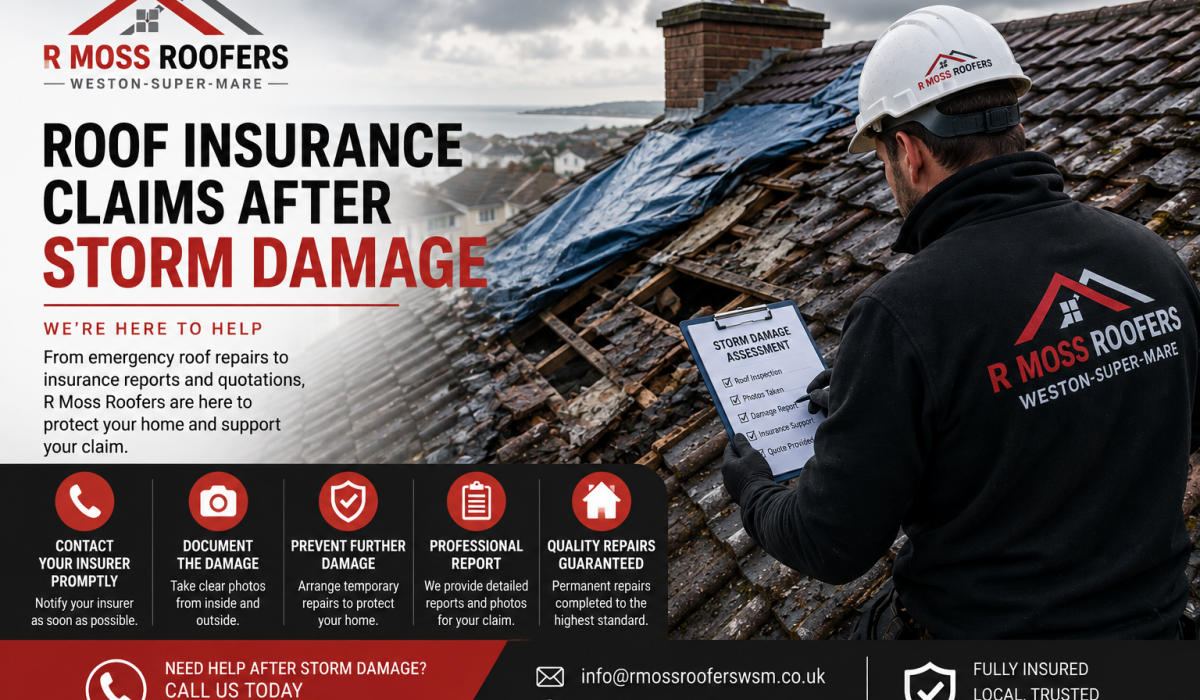
Strong winds and heavy rain can damage roof tiles, ridges, chimneys, flashing, gutters and flat-roof membranes. When this happens, homeowners may need to protect the property quickly while also providing suitable evidence for an insurance claim.
Taking the correct steps can help prevent further damage and create a clearer record of what occurred.
R Moss Roofing Services provides emergency roof inspections, temporary protection, roofing quotations and permanent repairs across Weston-super-Mare and North Somerset.
Put Safety First
Do not climb onto the roof during or immediately after severe weather.
Roof coverings may be loose, wet or unstable. Chimney masonry, branches and damaged gutters can also fall without warning.
From a safe position, look for:
- Missing or displaced tiles
- Broken ridge tiles
- Damaged chimney pots
- Loose flashing
- Torn flat-roof materials
- Hanging gutters
- Internal water staining
- Water close to electrical fittings
- Fallen debris around the property
Move belongings away from internal water where this can be done safely. Do not touch wet electrical fittings.
Contact Your Insurer Promptly
Notify the buildings insurer as soon as reasonably possible. Keep the policy number available and ask what evidence or authorisation the insurer requires.
The Association of British Insurers advises policyholders to contact their insurer promptly, arrange essential temporary repairs where necessary to prevent damage worsening, notify the insurer and retain receipts.
Policies and procedures vary, so homeowners should follow the instructions given by their own insurer.
Document the Damage
Evidence may help demonstrate the condition of the property after the event.
Where safe, record:
- Photographs of external damage from ground level
- Internal water staining
- Damaged ceilings and decoration
- Fallen tiles or debris
- The date and approximate time
- Relevant weather conditions
- Damaged belongings
- Temporary protection
- Roofing reports and quotations
- Receipts for emergency work
Do not discard damaged materials unless they present a safety or health risk or the insurer has agreed they can be removed.
Temporary Repairs Versus Permanent Repairs
An emergency roofing contractor may install temporary protection to reduce further water ingress. This could include safely securing loose materials, covering exposed areas or creating temporary weatherproofing.
Temporary work is not always intended to be the final repair.
Ask the roofer to explain:
- What has been made safe
- What has been temporarily sealed
- What permanent work is recommended
- Whether scaffolding will be required
- Whether further inspection is needed
- Whether internal drying or specialist work may be necessary
What Should a Roofing Quotation Include?
A useful insurance quotation should describe the proposed work clearly.
It may include:
- Property and roof location
- Observed damage
- Likely repair area
- Access requirements
- Scaffolding
- Materials
- Labour
- Waste removal
- Temporary work already completed
- Permanent repair recommendations
- Photographic evidence
- Any limitations of the inspection
A roofing contractor identifies damage and proposes repairs. The insurer ultimately decides whether the claim is covered under the policy.
Storm Damage or General Wear?
Buildings insurance commonly distinguishes between sudden insured events and deterioration caused by age or inadequate maintenance.
For example, wind may dislodge otherwise serviceable tiles. However, an insurer may take a different view where a roof was already extensively deteriorated.
This makes maintenance records, earlier photographs and previous repair documentation valuable.
Preventing Further Damage
Homeowners are generally expected to take reasonable steps to prevent damage from becoming worse.
Appropriate actions may include:
- Arranging temporary roof protection
- Moving possessions away from leaks
- Collecting water safely
- Isolating affected electricity with professional assistance
- Covering exposed internal areas
- Keeping receipts
- Following insurer instructions
Never compromise personal safety to protect property.
After the Claim Is Approved
Before permanent work begins, confirm:
- Which work the insurer has authorised
- Whether an excess applies
- Who appoints the contractor
- Whether the payment is made to the homeowner or contractor
- Whether additional defects require approval
- What guarantees should be provided
- Whether internal repairs are included
Keep copies of the quotation, approval, invoices, photographs and completion documentation.
Emergency Roofing Assistance in Weston-super-Mare
R Moss Roofing Services can assist with:
- Storm-damage inspections
- Emergency roof repairs
- Temporary weatherproofing
- Tile and slate replacement
- Chimney and leadwork repairs
- Flat-roof repairs
- Written roofing quotations
- Photographic evidence
Call: 07754 650583
Email: info@rmossrooferswsm.co.uk
Frequently Asked Questions
Should I contact the roofer or insurer first?
Contact the insurer promptly and ask about its procedure. Emergency work may still be necessary when immediate action is required to prevent further damage.
Will insurance pay for an old roof?
Coverage depends on the policy and cause of damage. Insurers may distinguish sudden storm damage from deterioration caused by age or poor maintenance.
Can emergency repairs be completed before approval?
Essential temporary work may be appropriate to prevent further damage, but the insurer should be informed and receipts retained.
What evidence should I keep?
Keep photographs, videos, roofing reports, quotations, receipts, damaged materials where safe and all communication with the insurer.