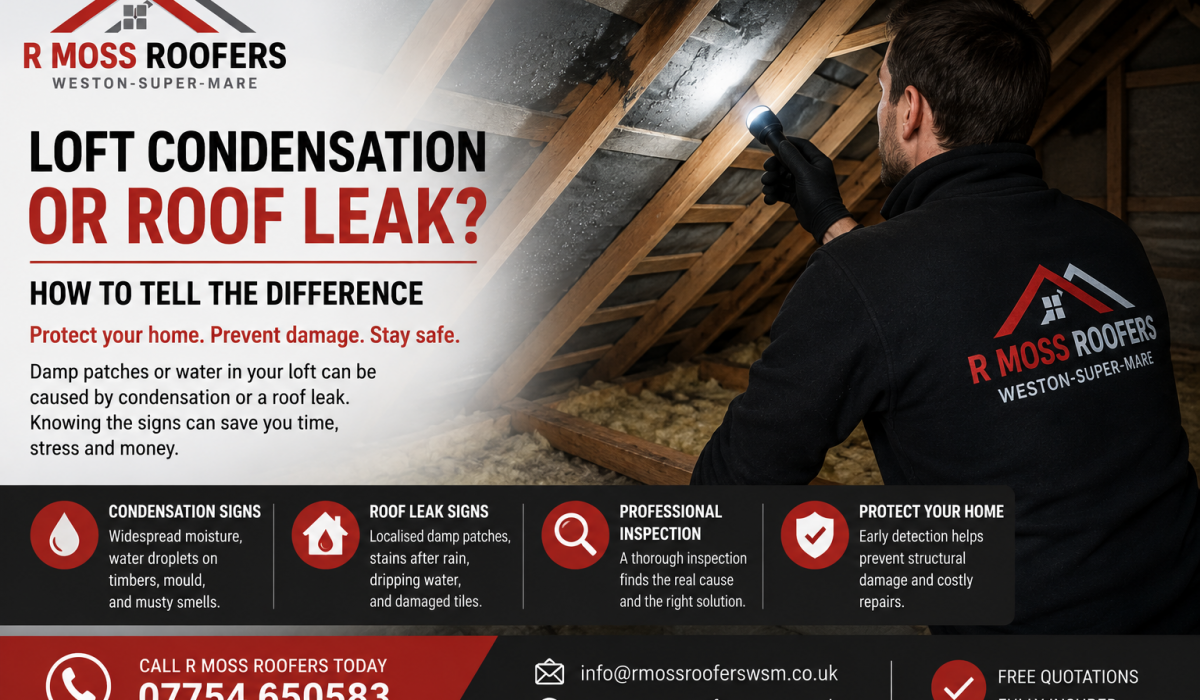
Water droplets, damp insulation or dark patches in a loft do not always mean rain is entering through the roof. The problem may be a roof leak, condensation or a combination of both.
Identifying the cause correctly is important. Repairing tiles will not solve moisture generated inside the property, while adding ventilation will not stop water entering through failed flashing.
R Moss Roofing Services investigates roof leaks, ventilation concerns and damp roof spaces across Weston-super-Mare and North Somerset.
What Causes Loft Condensation?
Warm air inside a home contains moisture generated by:
- Cooking
- Showering and bathing
- Drying clothes
- Breathing
- Unvented appliances
- Inadequate extractor fans
Warm, moist air rises and can enter the roof space through loft hatches, ceiling gaps, service penetrations and recessed lighting.
When that air reaches colder roof surfaces, the moisture can condense into droplets.
Common Signs of Condensation
Condensation often produces:
- Water droplets across many nail points
- Dampness on the underside of roofing membrane
- Widespread moisture rather than one isolated patch
- Mould on roof timbers
- Damp insulation
- A musty smell
- Increased moisture during cold weather
- Frost on nails or underlay during very cold conditions
- Black spotting around several areas of the roof space
The pattern may become more noticeable during winter because external roof surfaces are colder.
Common Signs of a Roof Leak
A roof leak is more likely when there is:
- A concentrated damp patch
- Water entering during or after rainfall
- Staining beneath a chimney or valley
- A visible slipped or broken tile
- Dampness around a roof window
- Water tracking down one rafter
- Localised damage around flashing
- A leak on one roof slope only
- Deterioration near a flat-roof junction or outlet
Water can travel before becoming visible, so the entry point may be some distance from the internal stain.
Can Condensation and Roof Leaks Occur Together?
Yes.
A small leak may dampen insulation, making moisture harder to disperse. Poor ventilation can then slow drying and increase condensation.
Similarly, condensation can damage timbers, underlay and fixings, potentially making the roofing system more vulnerable over time.
A complete inspection should therefore consider both external weatherproofing and internal moisture movement.
Why Loft Insulation Can Change Moisture Conditions
Insulation keeps more warmth inside the rooms below. This is beneficial for energy efficiency, but it can make the roof space colder.
Problems can arise when insulation:
- Blocks eaves ventilation
- Is pushed tightly into the roof edge
- Covers ventilation openings
- Becomes damp
- Is installed without addressing air leakage
- Creates inconsistent cold spots
The solution is not to remove effective insulation without proper advice. The roof’s ventilation, insulation and airtightness should be considered together.
Avoid Unplanned DIY Ventilation Changes
Adding random vents or opening the roofing membrane may not provide a compliant or effective solution.
The National Federation of Roofing Contractors advises that condensation should be addressed through recognised ventilation methods appropriate to the roof design, such as correctly designed eaves, ridge, tile or slate ventilation. Its guidance also warns that basic internal lap vents should not be treated as a substitute for compliant roof ventilation.
How a Roofer Investigates the Problem
A professional assessment may consider:
- External tile and slate condition
- Ridges and hips
- Valleys
- Chimney flashing
- Roof penetrations
- Underlay condition
- Eaves ventilation
- Ridge ventilation
- Insulation placement
- Extractor fan ducting
- Damp patterns
- Timber condition
- Timing in relation to rainfall and temperature
Photographs can help document both external and internal findings.
What Homeowners Can Do
Safe initial steps include:
- Record when the moisture appears.
- Note whether it follows rainfall.
- Check that bathroom and kitchen extractors discharge outside.
- Avoid drying large amounts of washing indoors without ventilation.
- Keep the loft hatch properly closed.
- Do not block visible eaves vents.
- Arrange an inspection when timber or insulation remains wet.
- Avoid walking on unsupported ceilings.
Arrange a Roof Leak or Condensation Inspection
For professional help identifying roof leaks, damp roof spaces and ventilation concerns in Weston-super-Mare:
Call R Moss Roofing Services: 07754 650583
Email: info@rmossrooferswsm.co.uk
Frequently Asked Questions
Why are the roofing nails wet?
Moist indoor air can condense on cold metal fixings. Widespread droplets across many nails often indicate condensation, although the full roof should be assessed.
Does mould in the loft mean the roof is leaking?
Not necessarily. Mould may result from persistent condensation, inadequate airflow, damp insulation or a roof leak.
Can blocked soffit vents cause condensation?
Blocked ventilation can contribute to poor moisture removal in roof designs that rely on eaves airflow.
Should wet loft insulation be replaced?
The moisture source must be identified first. Saturated or damaged insulation may need replacement after the roof space has been made weatherproof and allowed to dry.